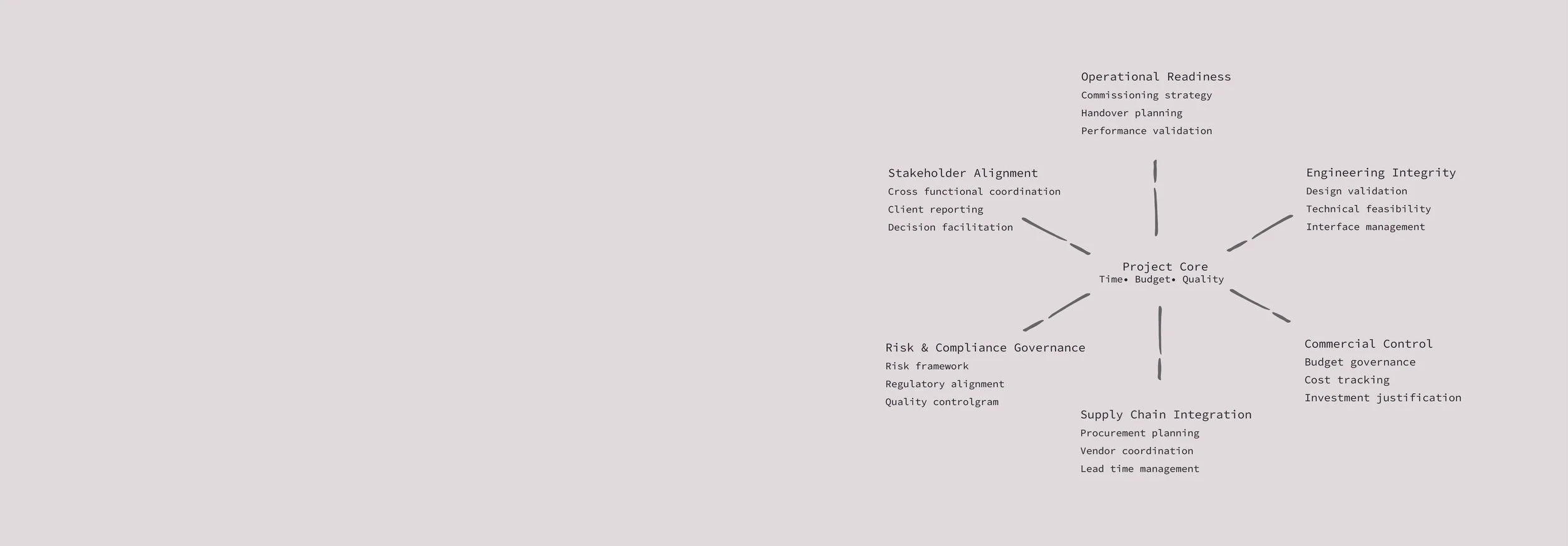
Engineering is the art of directing the great sources of power in nature for the use and convenience of man.”
Henry Petroski

Technical Project Management
Showcase: AI-Powered Robotic Picking & Packing System
A cutting-edge robotics system used to automate picking and packing in for automated Customer Fulfilment Centres(CFCs).
The solution blends robotic hardware with advanced machine learning and perception systems to improve throughput and efficiency.
The Program Structure
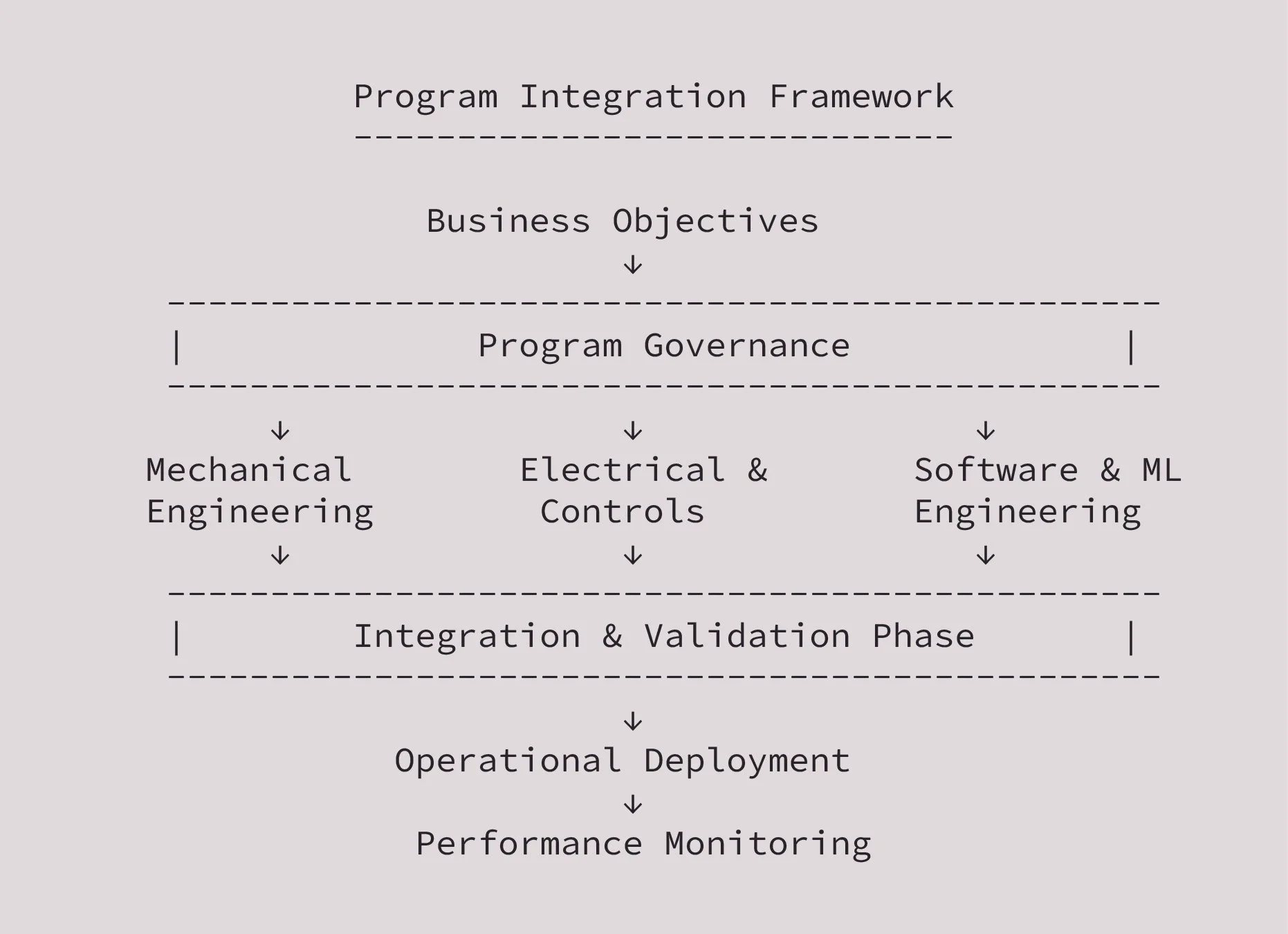
Deploying an AI-enabled robotic system into a live operational environment is fundamentally an integration challenge, not just a hardware deployment. Independent engineering domains, mechanical systems, controls, software, infrastructure, and operations, must converge into a single, validated production system without disrupting business continuity.
The core complexity lies in managing interdependencies: aligning hardware installation with software readiness, sequencing validation before exposure to operational load, and balancing technical performance with safety and uptime constraints.
This program was structured around a clear integration map, defining ownership boundaries, integration gates, risk domains, and validation milestones to ensure controlled system convergence. Rather than treating engineering streams as parallel work packages, the focus was on orchestrating them as a unified system.
The Engineering Challenge
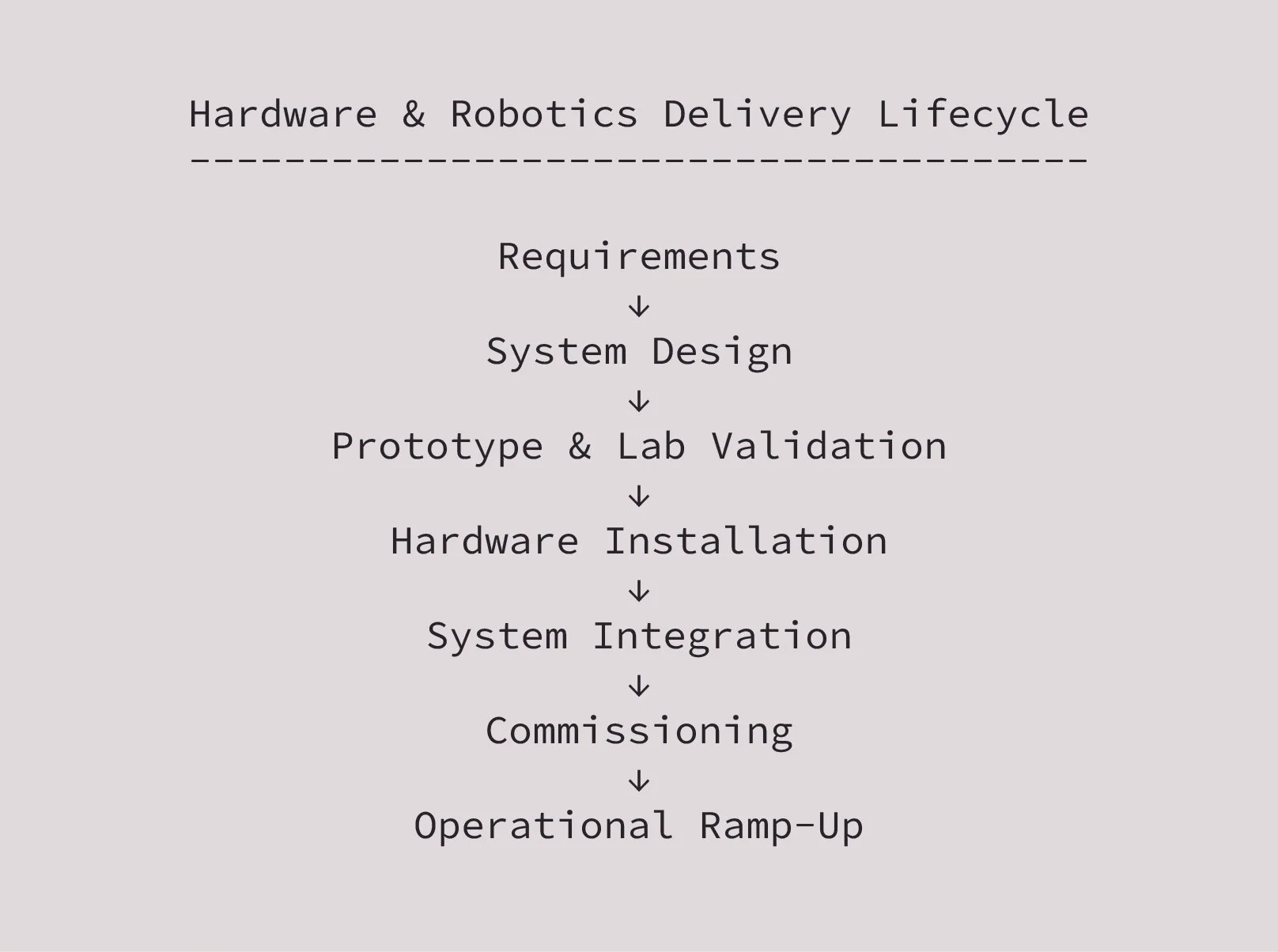
Robotic system deployment is not a single milestone, it is a staged convergence process across hardware, controls, and operations.
The lifecycle must account for:
Progressive system maturity from requirements to commissioning
Alignment between physical installation and software readiness
Controlled validation before operational exposure
Risk containment across technical and operational domains
Stable transition from development to live production
The complexity lies not in individual phases, but in managing the interfaces between them.
Risk Management Framework
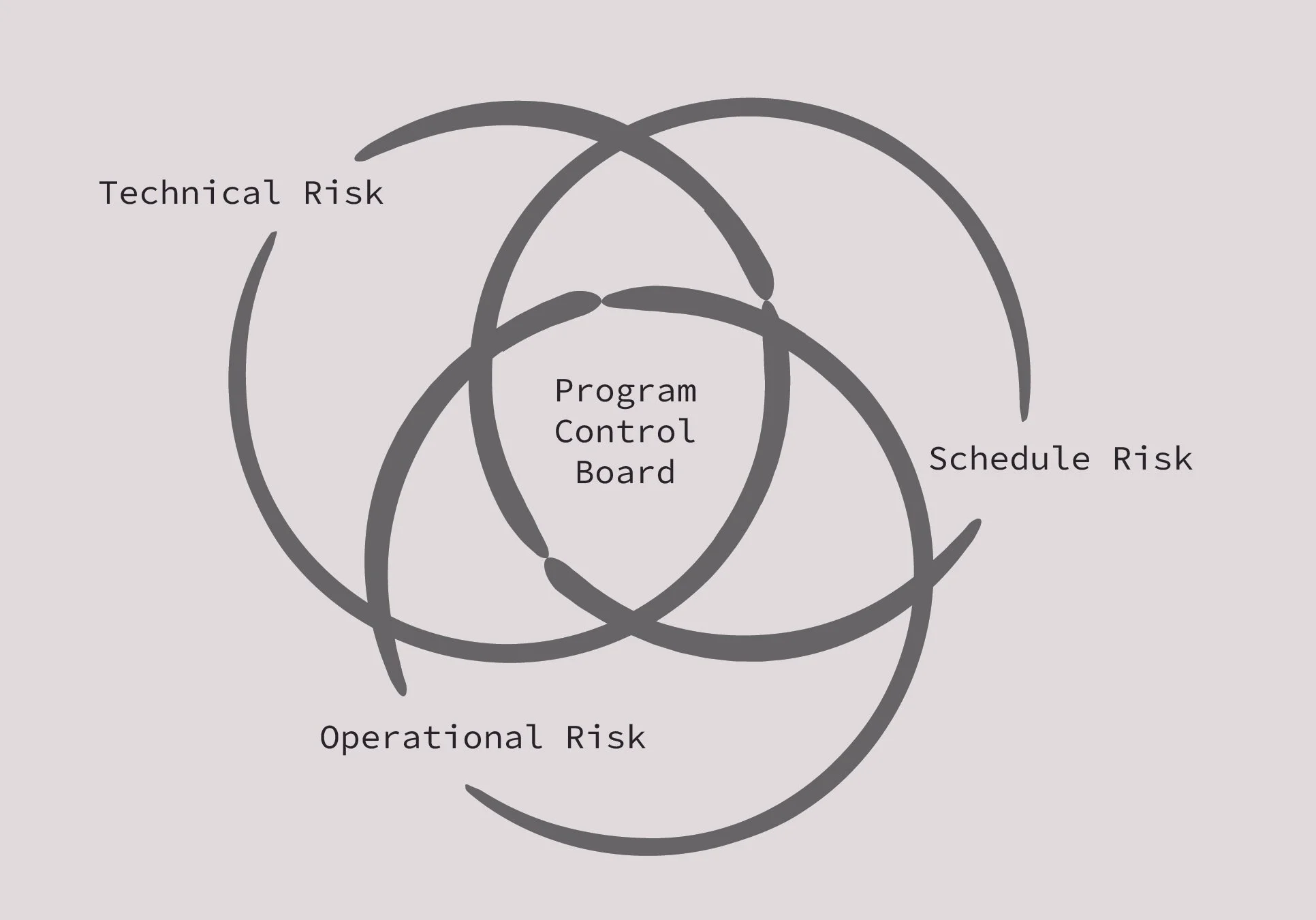
Robotic system deployment introduces interconnected risks across technical, schedule, and operational domains. Effective risk management focuses on controlled convergence rather than reactive issue resolution.
Key risk areas:
Technical: Integration stability, system performance under load
Schedule: Cross-team dependencies, installation sequencing
Operational: Safety exposure, business continuity during transition
Risks were governed through structured integration gates, change control processes, and Go/No-Go decision points, ensuring system stability before live operational scaling.